Review: Bloom Where You Are Planted SVG for Embroidery
As a designer who spends more time staring at stitch maps than most people care to admit, I approach every new digital embroidery file with a mix of curiosity and skepticism. We have all seen the flood of generic graphics online, but finding a design that translates well from a screen to actual thread requires a keen eye. Recently, I evaluated the Bloom Where You Are Planted SVG Cut File to see if it holds up under the needle for real-world craft business applications. This isn't just about whether the image looks cute on a monitor; it is about whether it survives the tension of a hoop and the texture of fabric.
First Impressions and Visual Personality
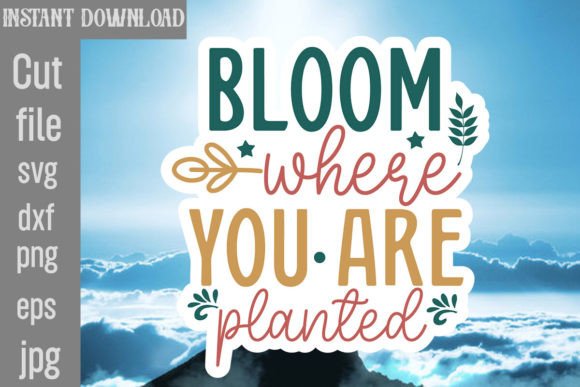
When I first opened the zip file, my immediate thought was about the versatility of the layout. The phrase "Bloom Where You Are Planted" carries a warm, encouraging mood that fits perfectly into the current trend of mindfulness and home-centric decor. Visually, the design relies on clean lines and a balanced composition. For an embroidery project, this is crucial. Overly complex details often get lost in translation when converted to stitches, but this graphic appears to have enough negative space to allow different stitch types to breathe.
The inclusion of vector formats like EPS and SVG alongside the DXF suggests that the original artwork was created with scalability in mind. This is a green flag for us in the Crafts and Graphics sectors. It means we can resize the element for a tiny embroidered patch or scale it up for a large tote bag design without losing the integrity of the shapes. The aesthetic feels organic yet structured, making it a strong candidate for both modern minimalist styles and rustic, farmhouse-inspired handmade products.
Real-World Application: The Tote Bag Test
To truly judge this asset, I imagined a specific client scenario: a local boutique owner needing a run of twenty canvas tote bags for a spring market. She wanted something uplifting but not overly floral or feminine, appealing to a broad demographic. The Bloom Where You Are Planted SVG Cut File seemed like the perfect fit here. Canvas provides a stable base, which is ideal for testing how the design handles stitch density.
In this context, the design would likely shine as a satin stitch application for the lettering, providing a smooth, glossy finish that contrasts nicely against the matte texture of the canvas. The accompanying graphical elements could be filled with a textured fill stitch to add depth. If executed correctly, the finished product would look professional and high-value, justifying a higher price point for the Etsy seller or boutique owner. Customers are drawn to items that feel personal and meaningful, and this message delivers that emotional connection instantly.
Adapting for Apparel and Home Decor
Beyond totes, this design has significant potential for custom apparel. Imagine this stitched onto the chest of a neutral-colored sweatshirt. The sweatshirt embroidery market is huge right now, and buyers love inspirational quotes. However, working with knit fabrics introduces challenges. The stretchiness of a sweatshirt means you must be careful with dense stitching. If the design is too heavy, it will pucker the fabric, ruining the drape of the garment.
For baby embroidery, such as on a onesie or a nursery pillow cover, the scale would need to be reduced. This is where checking the smallest details becomes vital. The lettering in "Planted" needs to remain legible when shrunk down. If the gaps between letters are too tight, the threads might bridge together during stitching, creating a muddy look. A prudent designer would test this on scrap fabric first, perhaps adjusting the pull compensation or switching to a simpler running stitch for smaller versions to maintain clarity.
Technical Considerations for Machine Embroidery
It is important to remember that the download includes SVG, DXF, EPS, and PNG files. These are primarily cut files for machines like Cricut or Silhouette, or vector assets for graphic design. They are not native machine embroidery design files (like PES, DST, or XXX) unless specified otherwise by the creator. This is a critical distinction. To use this for embroidery, you must digitize it yourself or hire a digitizer to convert these vectors into stitch data.
This actually offers a advantage for experienced decorators. By starting with a clean SVG or EPS, you have full control over the stitch density, direction, and type. You can decide exactly where to place a stabilizer and how to layer your thread colors. However, it also places the burden of technical execution on you. You need to ensure that sharp corners in the vector art are rounded off in the stitch file to prevent thread breaks. You must also verify that the design fits within your available hoop size, especially if you are working on curved surfaces like caps or hats.
Fabric and Texture Challenges
Not all fabrics play nice with every design. On dark fabrics, you will need to pay close attention to contrast. A light thread on a black hoodie looks striking, but only if the underlay is sufficient to prevent the dark fabric from showing through the stitches. Conversely, on textured fabrics like linen or waffle weave, fine details might get swallowed by the fabric's grain. In these cases, simplifying the design or increasing the stitch weight might be necessary.
For items that require frequent washing, such as kitchen towels or aprons, durability is key. Dense areas can become stiff and uncomfortable over time. A smart approach is to use lighter fill patterns or incorporate applique design techniques where a piece of fabric is stitched down, reducing the amount of thread buildup while adding a nice textural element to the small shop product.
Commercial Viability and Branding
From a business perspective, the Bloom Where You Are Planted SVG Cut File offers excellent branding potential. It is versatile enough to be used across a cohesive collection—matching mugs (via sublimation using the PNG), shirts, and wall art. Consistency builds trust. When a customer sees the same high-quality design on multiple items, it reinforces the professionalism of your brand.
However, before listing this as a commercial embroidery item, you must review the licensing terms provided with the download. While the file structure suggests it is ready for creation, selling the digital file itself is usually prohibited unless explicitly stated. Selling the physical finished product is generally the intended use case for crafters. Always double-check these details to protect your craft business from legal issues.
Final Verdict for Designers
In conclusion, this asset is a solid foundation for a variety of creative projects. Its strength lies in its clear message and adaptable geometry. Whether you are creating a holiday embroidery gift, a wedding favor, or stock for your online store, the design holds up well conceptually. The real work lies in the digitization and material selection. Test your stitch counts, respect the fabric limitations, and always prioritize the tactile experience of the final item. If you take the time to refine the stitch path and choose the right thread colors, this design can elevate a simple piece of cloth into a cherished keepsake.
Remember, the difference between a good product and a great one often comes down to the details. Check your tension, mind your stabilizers, and let the message of the design shine through your craftsmanship. For the creative entrepreneur willing to put in the technical legwork, the Bloom Where You Are Planted SVG Cut File is a worthy addition to the library.